

Differences between pulsed laser and continuous laser in laser cleaning

Pulsed vs Continuous Laser: Which Technology Is Best for Laser Cleaning?
Within the field of laser technology, one question appears repeatedly across the industry:
Which is better: a pulsed laser or a continuous laser (CW)?
The technically accurate answer, even if it may seem less dramatic, is that there is no single technology that is universally better.
The right choice depends on several factors, including the type of process, the material being treated, and the physical effect required on the surface.
In this article, we focus specifically on laser cleaning applications, where both pulsed and continuous laser technologies are widely used to remove oxides, paint layers, and other surface contaminants.
Understanding how each system works is essential to selecting the most suitable laser cleaning technology for each industrial application.
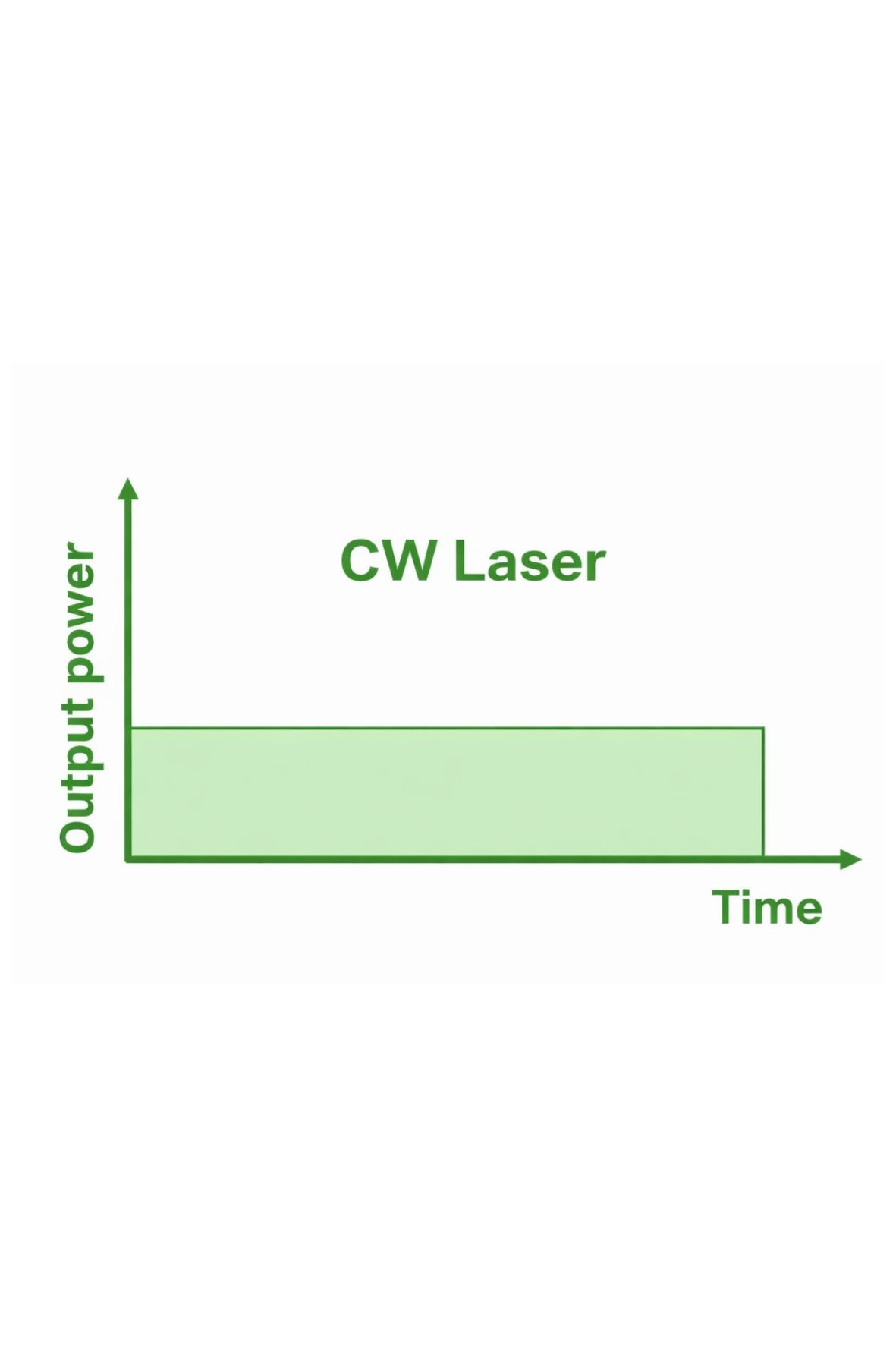
How a continuous wave (CW) Laser works in laser cleaning
A continuous wave laser, commonly referred to as a CW laser, emits energy in a constant beam while the laser source remains active.
Unlike pulsed systems, the energy delivery is steady, meaning the surface being treated receives a continuous flow of energy. This produces a controlled and sustained thermal interaction with the material.
In laser cleaning applications, this behaviour allows surface contaminants to be removed through controlled heating of the unwanted layer. As the energy interacts with the material, coatings such as oxidation, paint or residues can detach or evaporate from the surface without the need for mechanical abrasion or chemical agents.
Laser cleaning systems based on continuous wave sources are particularly suited to applications where the priority is:
-
high productivity
-
treatment of large surface areas
-
industrial processes where processing speed is critical
For this reason, CW laser cleaning systems are widely used in industrial environments where metal components, structural parts or large assemblies need to be cleaned quickly and efficiently.
How a pulsed laser works in laser cleaning
A pulsed laser operates in a fundamentally different way. Instead of delivering energy continuously, the laser releases energy in extremely short and controlled pulses.
During each pulse, the energy is concentrated within very small time intervals, allowing the system to reach very high peak power levels while limiting overall heat transfer to the material.
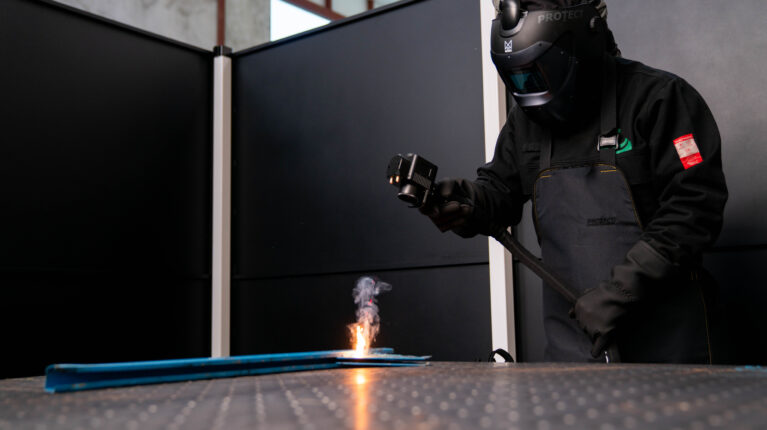
In laser cleaning processes, this mechanism produces what is commonly known as micro-ablation. Surface contaminants are removed through small, highly concentrated energy impacts that detach the unwanted layer from the substrate without exposing the material to prolonged heat.
The result is a cleaning process characterised by:
-
high precision
-
a minimal heat-affected zone
-
excellent process control
Because of these characteristics, pulsed laser cleaning systems are widely used in applications where preserving the integrity of the base material is critical. Typical examples include industrial moulds, technical components, and high-precision parts where surface quality must be maintained.
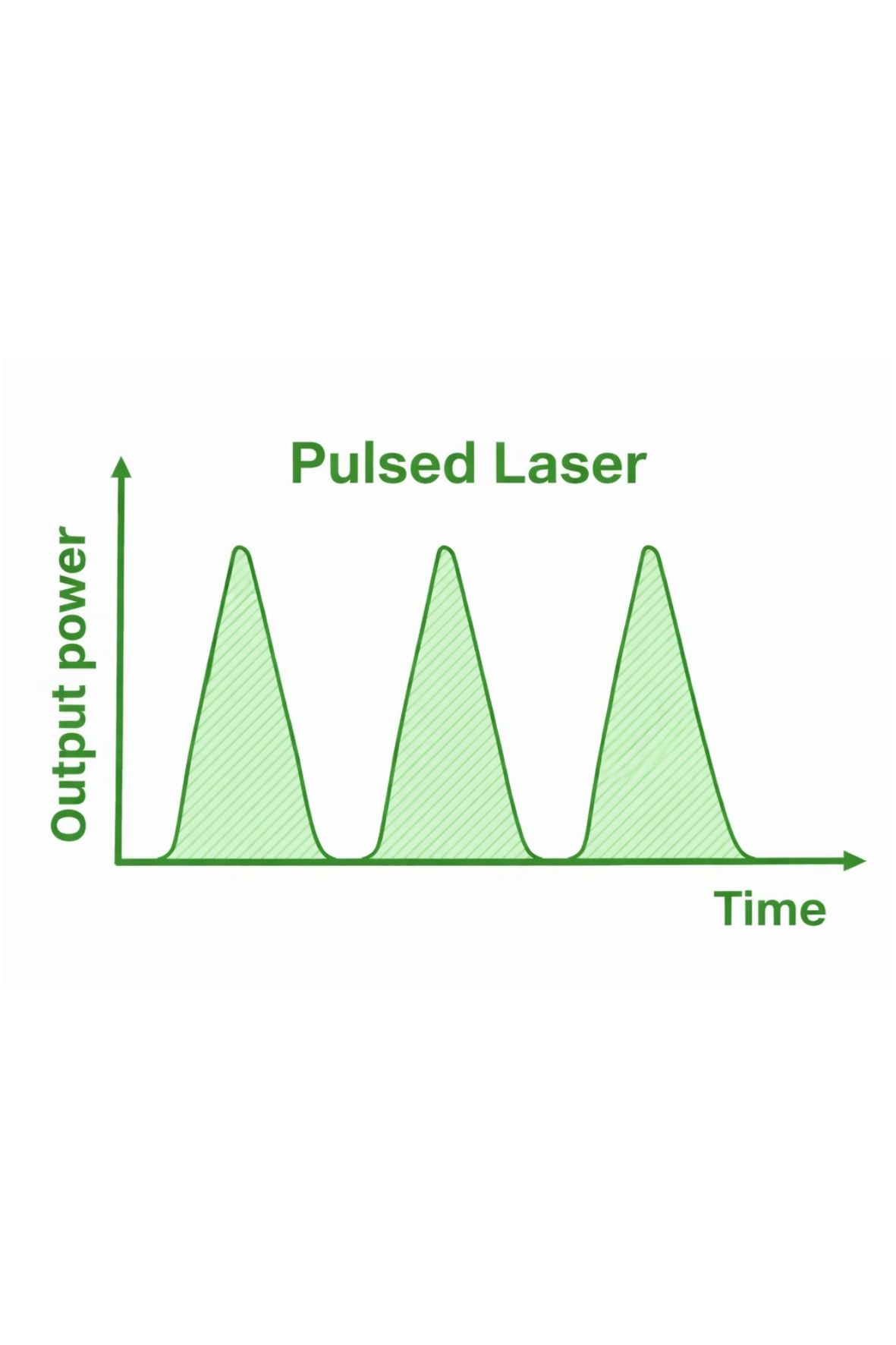
Key differences between Pulsed and Continuous lasers
The distinction between these two laser technologies does not lie solely in the power of the equipment, but rather in how the energy is delivered to the material during the process.
The way energy interacts with the surface directly influences the thermal behaviour, precision, and type of application for which each technology is best suited.
| Feature | Continuous Laser (CW) | Pulsed Laser |
|---|---|---|
| Energy emission | Continuous beam | Delivered in pulses |
| Thermal interaction | Sustained heat transfer | Highly localised energy input |
| Peak power | Moderate | Very high |
| Precision | High | Very high |
| Typical application | High-productivity cleaning | Precision surface cleaning |
When to use a pulsed laser and when to use a continuous laser
When the objective is to clean large surfaces or achieve high processing speeds, systems based on continuous wave (CW) lasers generally provide very efficient performance.
On the other hand, when the process requires maximum precision or strict thermal control, a pulsed laser is often the more suitable solution.
It is important to consider that each material and industrial application reacts differently to laser interaction. For this reason, performing process testing before selecting the final technology is often recommended.
In practice, laser testing allows manufacturers to evaluate which system delivers the best performance and surface quality for a specific application.
Which laser technology should you choose for your business?
Choosing between a pulsed laser and a continuous wave (CW) laser is not about deciding which technology is better in absolute terms, but rather about identifying which solution best matches the requirements of a specific application.
If the goal is to clean large surface areas with high productivity, systems based on continuous wave lasers (CW) are typically the most efficient option.
By contrast, when the process demands maximum precision and strict thermal control, pulsed laser systems allow for a greater level of control over the surface being treated.
The final decision will always depend on several factors, including the material, the type of contaminant or coating present, and the specific requirements of the industrial process.
At LC LASERS, specialists in industrial laser technology based in Barcelona, we support companies in analysing their applications and selecting the most suitable laser cleaning solution for their production needs.