Recommended PPE for industrial laser welding
Laser safety eyewear: the most critical PPE
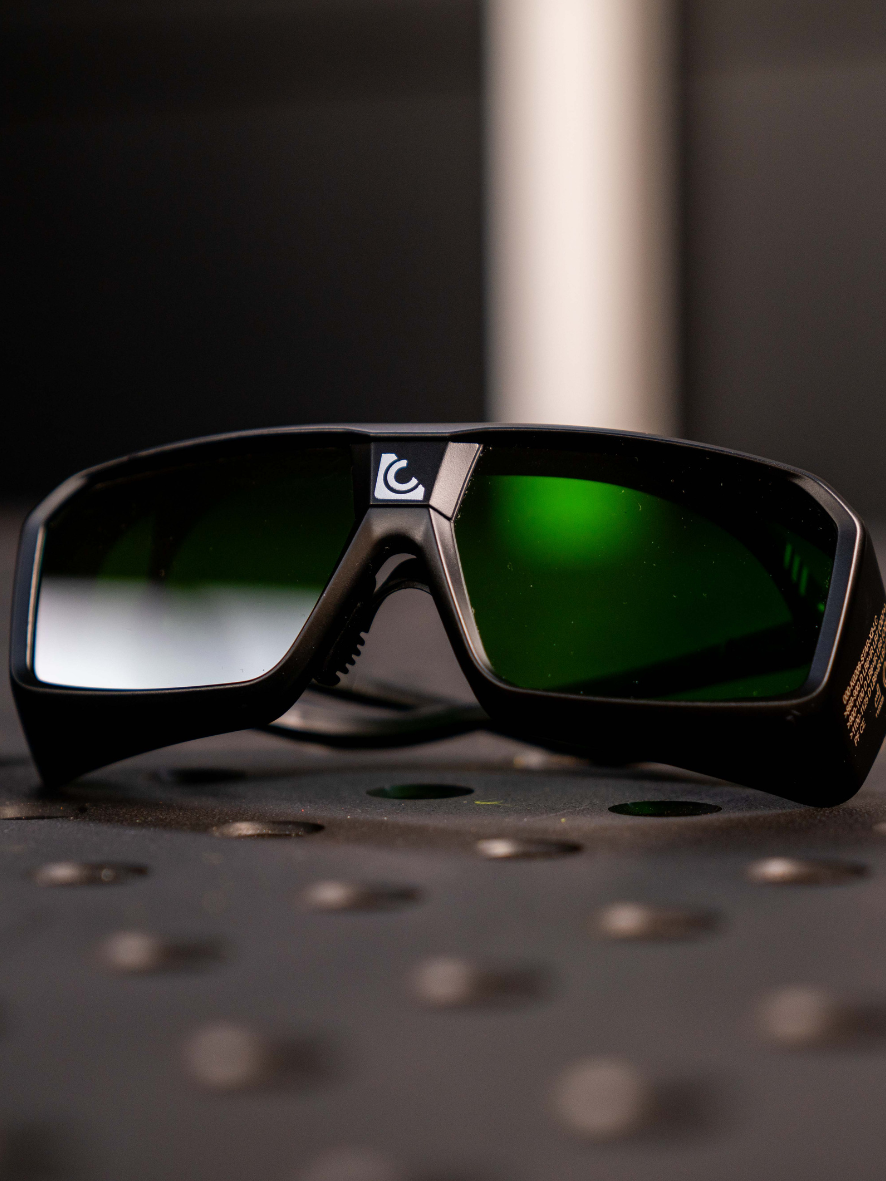
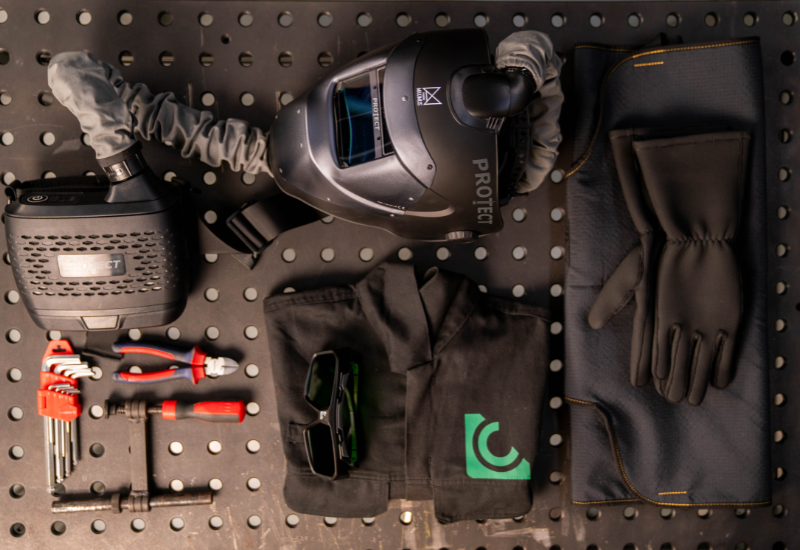
Laser safety glasses are the most important protective equipment during any laser welding operation.
Not all laser safety eyewear provides the same level of protection.
Safety glasses must be selected according to factors such as:
- The laser wavelength.
- The laser power.
- The operating mode (continuous wave or pulsed).
- The required protection level for the specific application.
In Europe, laser safety eyewear must comply with EN 207, the standard defining resistance requirements against laser radiation and the required protection levels.
For this reason, generic or uncertified safety glasses should never be used unless they are specifically certified for the laser system in operation.
Protective gloves
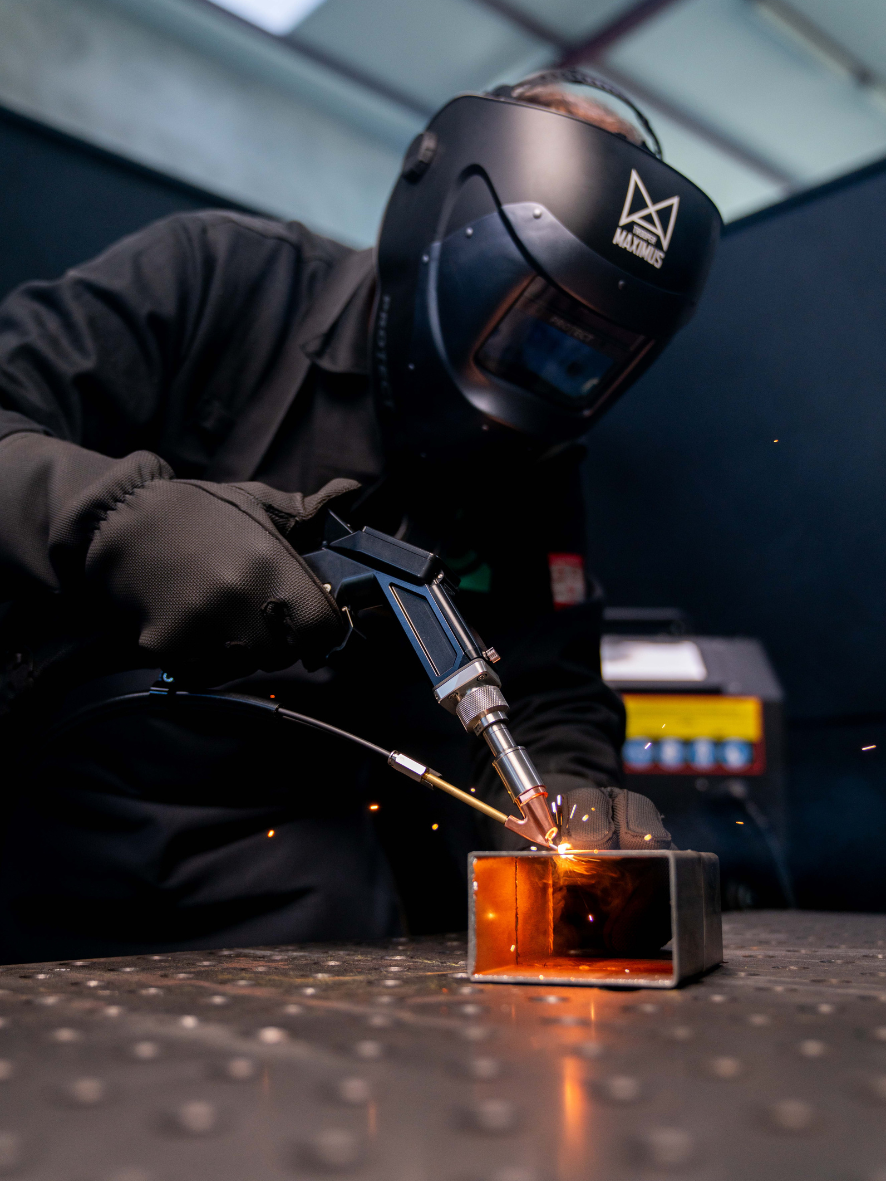
Although gloves do not protect against laser radiation, they are essential when handling hot workpieces and help reduce the risk of cuts and minor particle projections.
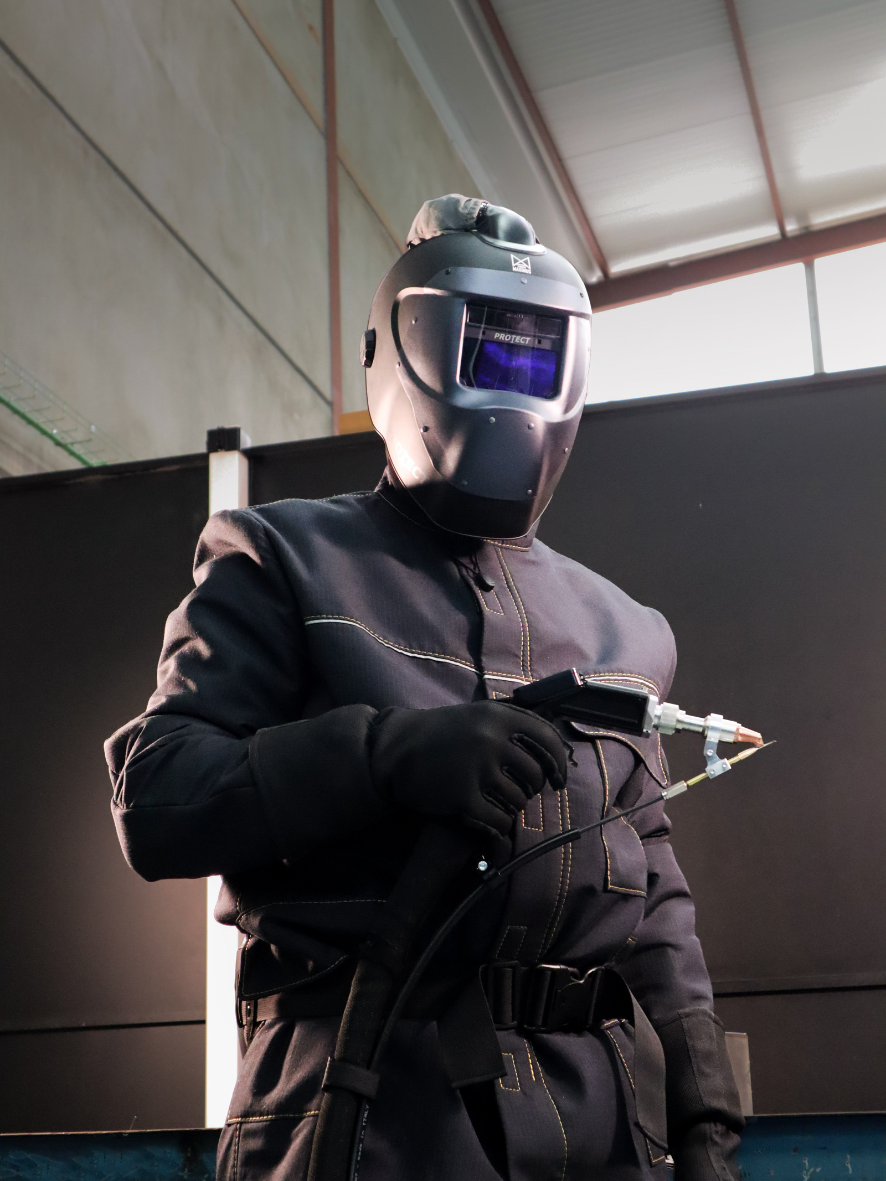
The appropriate glove depends on the application and the material being handled, but it should always provide sufficient dexterity for precise operation of the laser welding gun.
Appropriate protective clothing
Operators should wear long-sleeved industrial workwear made from materials suitable for industrial environments.
In addition to protecting against minor spatter and accidental contact with hot surfaces, appropriate clothing reduces skin exposure during welding operations.
Loose-fitting garments should also be avoided, as they may interfere with the operation of the equipment or increase workplace hazards.
Safety footwear
As with any industrial manufacturing process, certified safety footwear protects against falling components, tools, and materials.
Although it is not laser-specific protection, it forms an essential part of the recommended PPE for industrial environments.
Respiratory protection
Laser welding can generate metal fumes whose composition depends on the material being processed.
Whenever there is a risk of exposure, an appropriate fume extraction system should be used and, where required by the risk assessment, suitable respiratory protective equipment should also be provided.
Local exhaust ventilation (LEV) is generally the most effective solution for reducing fume concentration within the working area.